Sluit menu
Binnenland
Buitenland
Economie
Den Haag
Cultuur
Wetenschap
Sport
Opinie
Columnisten
Tech en Media
Boeken
Leven
Slim leven
In Beeld
Carrière
Klimaat
Recht
Podcast
Archief
Luister naar
Commentaar
Ombudsman
Puzzels
Magazine
Service
Webwinkel
Familieberichten
Over NRC
Service
Bezorgservice
Onderbrekingsservice
Verhuisservice
Mijn gegevens
Mijn abonnementen
FAQ Digitaal Lezen
Nieuwsbrieven
Veelgestelde vragen
Mijn leeslijst
Digitale krant
Wachtwoord vergeten
Menu
NRC
Abonneren
Mijn nieuws
Podcasts
Digitale krant
Puzzels
Mijn NRC
Terug
Lees meer
Inloggen
Neem een abonnement
Mijn nieuws
Mijn leeslijst
Mijn geschiedenis
Digitale krant
Nieuwsbrieven
Onderwerpen
Ik ben abonnee
Neem een abonnement
Instellingen
Weergaveopties
Uitloggen
Hoe kunt u ons bereiken?
Vanwege het coronavirus werken onze medewerkers thuis.
Service
Privacy-instellingen
Notificaties
Lichte weergave
Donkere weergave
Volg instellingen van mijn apparaat
Bezorgservice
Vakantieservice
Verhuisservice
Mijn gegevens
Mijn abonnementen
Abonnement delen
Gedeeld abonnement
FAQ Digitaal Lezen
Veelgestelde vragen
Wachtwoord vergeten
Mijn nieuws
Binnenland
Buitenland
Economie
Den Haag
Cultuur
Wetenschap
Opinie
Boeken
Leven
Carrière
Webwinkel
Puzzels
Al abonnee?
Inloggen
Kabinetsformatie
Formatie
PVV, VVD, NSC en BBB beloven ‘nieuwe weg’: wat staat er in het ‘hoofdlijnenakkoord’?
Bijna zes maanden na de Tweede Kamerverkiezingen publiceerden PVV, VVD, NSC en BBB afgelopen nacht een hoofdlijnenakkoord van 26 pagina’s. Dat is fors minder lang dan eerdere regeerakkoorden.
Formatieblog
Gemengde reacties van brancheorganisaties op coalitieakkoord
Brancheorganisaties reageren donderdag verschillend op het nieuwe coalitieakkoord dat door het beoogde kabinet van PVV, NSC, BBB en VVD is uit onderhandeld.
Analyse
Radicaal-rechts
Hoe de PVV van Wilders naar het centrum van de macht schoof
Met het onderhandelaarsakkoord is radicaal-rechts definitief de grootste machtsfactor in Den Haag geworden. De PVV werd steeds meer geaccepteerd, ook door partijen die tot voor kort afstand hielden.
Analyse
Radicaal-rechts en cultuur
Radicaal-rechts in de regering: betekent dat minder kunst of andere kunst?
Het partijprogramma van de PVV is helder: ‘Stoppen met kunst- en cultuursubsidies’. Is dat typisch radicaal-rechts beleid? Wie naar Wilders’ internationale geestverwanten kijkt, ziet iets anders.
Laatste nieuws
Meer
Zomergasten
Adriaan van Dis verlangt naar ‘langzame televisie’ en is opnieuw presentator ‘Zomergasten’
Televisieprijs
Bodem, De Afhaalchinees en De Joodse Raad genomineerd voor Zilveren Nipkowschijf
Bedrijfsopvolgingsregeling
Fiscus: verruiming van opvolgingsregeling moeilijk uitvoerbaar en fraudegevoelig
Lhbtiq+ gemeenschap
Pride gaat vanaf 2025 een maand lang duren in Amsterdam
Slowakije
Slowaakse premier Robert Fico neergeschoten, verkeert in levensgevaar
Slowakije
Moordaanslag op Slowaakse premier zet land onder politieke hoogspanning
Migratie
Nederland roept Brussel op tot nog strenger migratiebeleid
Gaza-protesten
Concertgebouw schrapt concerten Jerusalem Quartet: ‘We kunnen de veiligheid niet garanderen’
Schietpartij
OM eist levenslang tegen ‘Lucky’ voor neerschieten ex-vriendin en haar moeder
Voorlopige hechtenis
Sarah V., verdacht van poging haar dochter te vermoorden, is voorlopig vrij
Meest gelezen
Formatie
PVV, VVD, NSC en BBB beloven ‘nieuwe weg’: wat staat er in het ‘hoofdlijnenakkoord’?
Youp van ’t Hek
Vriend en vijand over Youp van ’t Hek: ‘Ik heb weleens gedacht: wat jammer dat we elkaar niet onder andere omstandigheden hebben leren kennen’
Reportage
Laatste show Youp van ’t Hek
Op afscheidstournee met Youp van ’t Hek: ‘Ik heb een hoop mensen aan het lachen gemaakt’
Analyse
Radicaal-rechts
Hoe de PVV van Wilders naar het centrum van de macht schoof
Profiel
Willem Jebbink
Daarom schrijven studenten het nummer van deze advocaat op hun arm
Meer nieuws
Verder vandaag
Gaza-oorlog
Meerdere doden bij nachtelijke aanvallen in Gaza en op Westelijke Jordaanoever
Zeker vijf Gazanen zijn vannacht gedood door Israëlische aanvallen. Ook zijn vijf Israëlische militairen gedood door eigen vuur, in het noorden van Gaza.
Zomergasten
Adriaan van Dis verlangt naar ‘langzame televisie’ en is opnieuw presentator ‘Zomergasten’
Het is niet de eerste keer dat Van Dis het programma presenteert: vanaf 1999 maakte hij al vier seizoenen. Hij volgt Theo Maassen op die na een seizoen stopte.
Moordaanslag Slowaakse premier
Fico volgens Slowaakse vicepremier buiten levensgevaar
De premier van Slowakije, Robert Fico, is geraakt door vijf kogels: in zijn buik, borst en ledematen. Volgens vicepremier Tomás Taraba is hij na een urenlange operatie buiten levensgevaar, maar dat is nog niet door anderen bevestigd.
Niet te missen
Profiel
Willem Jebbink
Demonstrerende studenten hebben zijn nummer op hun arm staan: wie is advocaat Willem Jebbink?
Donderdag staan de eerste drie UvA-activisten voor de rechter. Willem Jebbink is hun raadsman. De loodgieterszoon uit Twente heeft naast studenten ook krakers bijgestaan, evenals corona- en klimaatdemonstranten.
Youp van ’t Hek
Vriend en vijand over Youp van ’t Hek: ‘Ik heb weleens gedacht: wat jammer dat we elkaar niet onder andere omstandigheden hebben leren kennen’
Youp van ’t Hek nam in zijn werk tallozen op de korrel. Beroemd werd zijn aanval op het alcoholvrije biermerk Buckler van Heineken. De Heineken-baas nu: „Ik was niet boos. Daar moet je boven staan.” En wat vinden Louis van Gaal, Brigitte Kaandorp en zijn dochter van hem?
Ruimtevaart
Boeing-capsule staat op het punt om astronauten naar het ISS te brengen
Na veel tegenslag zal de Starliner-capsule van Boeing aanstaande dinsdag echt mensen naar ruimtestation ISS gaan brengen.
Astronomie
In de dichte atmosfeer van exoplaneet Janssen waaien permanente stormen over oceanen van lava
Een planeet in het sterrenbeeld Kreeft heeft een heel dichte atmosfeer. Het oppervlak bestaat uit gesmolten steen.
Interview
Fedja van Huêt
Fedja van Huêt over ‘Maxton Hall’: Soms denk je: waarom wilde ik dit ook al weer?
Fedja van Huêt speelt de slechterik in ‘Maxton Hall’, een grote Duitse serie van Amazon. „Het was the real deal: grotere sets, een eigen trailer en dat soort dingen. Te gek om onderdeel van te zijn.”
Cultuur uitgelicht
Reportage
Laatste show Youp van ’t Hek
Op afscheidstournee met Youp van ’t Hek: ‘Ik heb een hoop mensen aan het lachen gemaakt’
Youp van ’t Hek (70) stopt als cabaretier. Zaterdag 25 mei besluit hij zijn carrière in Carré. „Ik heb niet zoveel traantjes. Maar als ik er voor het laatst sta, zal ik wel even moeten slikken.” Arjen Ribbens volgde zijn afscheidstournee, ‘De laatste ronde!’
Reportage
Opera in Oekraïne
Oekraïense operamakers: ‘Andere mannen strijden al jaren aan het front. Dus wij klagen niet’
In Kyiv gaat het culturele leven door, ondanks de oorlog. Collectief Opera Aperta maakt de experimentele opera ‘Gaia-24’, over de verwoesting van de Kachovka-dam, die ze spelen op Festival O in Rotterdam. „Voor elk internationaal overleg bekijken we welke wapens dat land aan Oekraïne heeft gegeven.”
Interview
Music Meeting Festival
Hiphopproducer Bnnyhunna: ‘Ik wil dat mijn muziek klinkt als een stranddag met zo’n briesje op je gezicht’
Veelgevraagd hiphopproducer Bnnyhunna kreeg zijn muzikale opvoeding in de Ghanese pinksterkerk in Amsterdam-Zuidoost waar hij nog altijd het koor leidt. „De kerk of een festival: het idee is hetzelfde.”
Cultuurdagboek
Scott Beekhuizen (Prins S. en de Geit): ‘Vrij zijn, dansen, even geen angst. Euforie. Dit is waar we het voor doen’
Scott Beekhuizen is de Prins S. in de Haagse electropopgroep Prins S. en de Geit, met wie hij onlangs het album Partijtje uitbracht. Ze speelden dit jaar op Paaspop, in Paradiso, TivoliVredenburg en op twee Bevrijdingsfestivals, en toeren deze zomer nog langs Rock Werchter, Concert at Sea en veel meer.
cultuur
Meer
Opinie & Columns
Column
Hubert Smeets
De blinde vlek van radicaal-links
Nadat studenten in Tbilisi en andere Georgische steden maandag door de politie in elkaar waren geslagen of gearresteerd – maar desondanks bleven demonstreren tegen een…
Opinie
Bestuur
Kan de universiteit weer een universitas worden?
Het gebrek aan democratie aan de universiteiten bedreigt het wezen van de universiteit als instituut, vinden Rens Bod, Remco Breuker en Ingrid Robeyns.
Column
Frits Abrahams
Hoe zal het aflopen?
Het hele nieuwsgebeuren lijkt steeds meer één grote cliffhanger te worden, geconcentreerd rond de vraag: hoe zal het aflopen?
Meer Opinie & Debat
Meer
Beste van NRC
Interview
Ghassan Abu-Sittah
|
Plastisch chirurg
‘Wat ik gezien heb in Gaza, kan niet ongedaan worden gemaakt’, aldus een arts die in Gaza werkte
Nederland ontzegde de Brits-Palestijnse arts Abu-Sittah vorige week toegang. Hij denkt dat dit verband houdt met zijn rol als getuige bij het Internationaal Strafhof, waar hij als expert sprak over mogelijke Israëlische oorlogsmisdaden in Gaza.
Onderwijsgeschiedenis
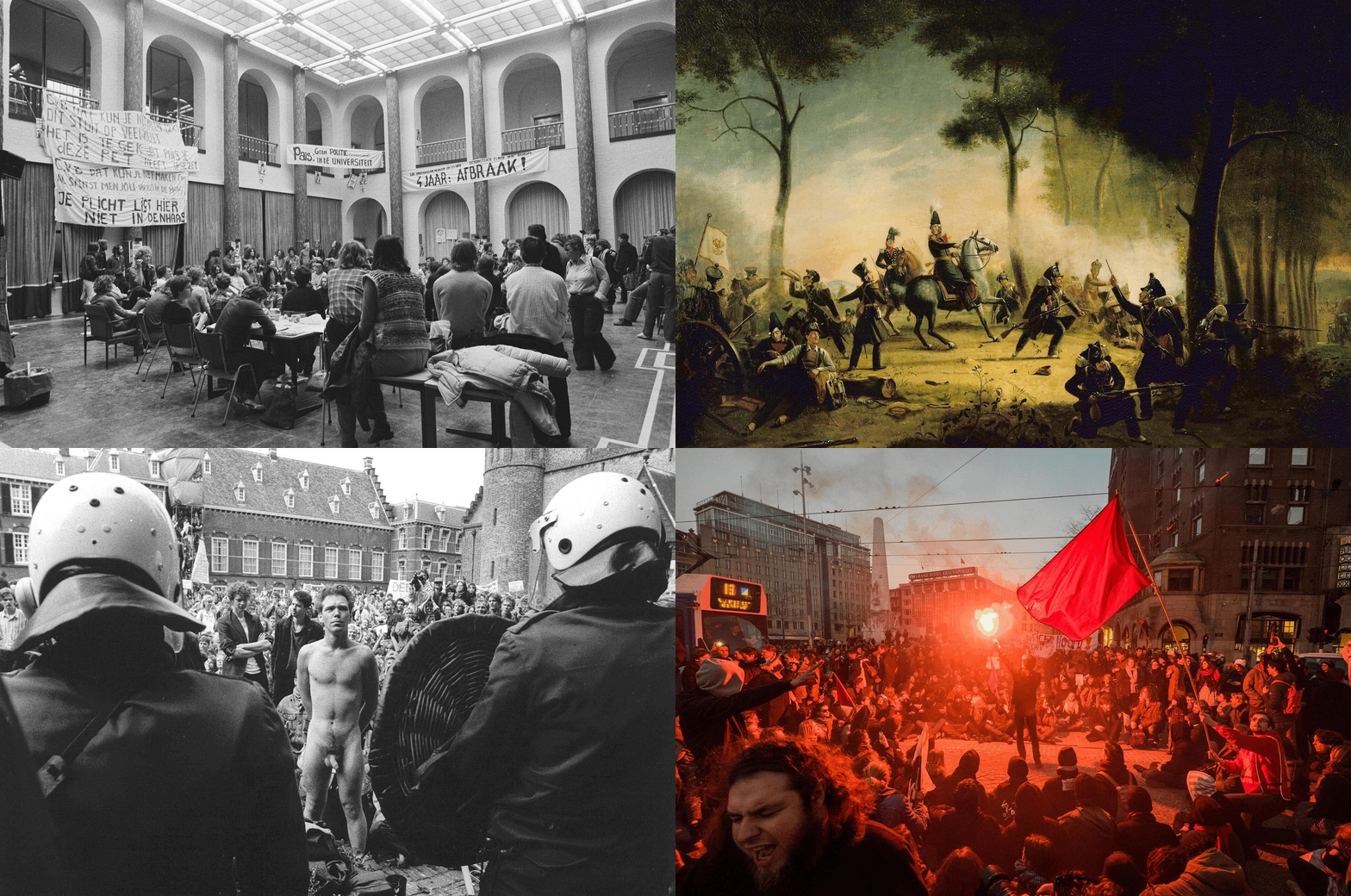
Bombardement van een prof en de bezetting van een kernreactor: studentenprotesten zijn eeuwenoud
Zolang universiteiten bestaan, hebben studenten gedemonstreerd. Soms deden ze dat om hun eigen positie te verbeteren, soms uit politiek engagement. „Je kan nieuwe ideeën niet permanent buiten de deur houden.”
Interview
Annetje Ottow
‘Als universiteit hebben we steken laten vallen. Dat moffelt dit huidige bestuur níét onder het tapijt’, zegt de Leidse collegevoorzitter Ottow
Annetje Ottow universiteitsvoorzitterDe Universiteit Leiden liet onderzoek doen naar meldingen van jarenlang machtsmisbruik door een hoogleraar archeologie. Het rapport laat zien dat het probleem groter is. „Er is te veel gebeurd.”
Analyse
Boeken
Het grootste uitgeefconcern van Nederland komt in Amerikaanse handen. ‘Moeten we hier wel zo blij mee zijn?’
VBK, de grootste boekenuitgever van Nederland, wordt onderdeel van de Amerikaanse uitgeefreus Simon & Schuster – en komt zo indirect in handen van private equity. „Ik heb geen flauw benul hoe dit gaat uitpakken.”
Meer Beste van NRC
Meer
De meest recente podcasts
Podcast
Hoe het studentenprotest in Amsterdam escaleerde
Podcast
Voor iedereen die ook zo'n moeite heeft met slapen: probeer deze tips!
Podcast
Journalist Sanne Bloemink over de zoektocht naar een oplossing voor pijn
Podcast
Wat de mens tot zijn eerste oorlog dreef
Podcast
Tom-Jan Meeus over het gevaar van duidelijke taal
Podcast
Aflevering 8: Conclusies
Podcast
Aflevering 8: Hoe een samenleving de Zwarte Dood overleeft
Meer
Meer
Mijn nieuws
Meer artikelen
Meer
Binnenland
Liveblog
Gebouwen van Universiteit Utrecht weer open, lessen gaan door
Het onderwijs op de Universiteit Utrecht gaat donderdag door, meldt de universiteit. Wel worden de lessen in het gebouw op Janskerkhof verplaatst naar een andere locatie.
Column
Sjoerd de Jong
Een safe space voor academische Intifada
Het was een opmerkelijk contrast, wie weet nog eens interessant voor sociaalpsychologisch onderzoek. De studenten die zich maandag verzamelden op het Roeterseiland van de…
Reportage
Drugscriminaliteit
Het dilemma voor de burgemeester van IJmuiden: pak je één dealer op, dan begint de rest een drugsoorlog
Succesvol politieonderzoek in IJmuiden haalde in 2021 vijf dealende broers van straat. Maar dat bleek niet het eind van de drugshandel, maar juist het begin van een nieuwe fase, met veel geweld. Hoe zinvol is het drugsbeleid eigenijk? Een casus op straatniveau.
Meer Binnenland
Meer
Politiek Den Haag
Volg
Politiek Den Haag
Formatie
‘Het kan niet meer misgaan’, zegt Wilders: er komt een kabinet met zijn partij erin
Wilders zal woensdag de naam van zijn premierskandidaat bekendmaken. De andere partijen weten nog niet wie hij op het oog heeft. In Den Haag gaat de naam van oud-informateur en PvdA’er Ronald Plasterk rond.
Financiën
Het moeilijkste bewaren ze in de formatie voor het laatst
De laatste loodjes van de kabinetsformatie zijn het zwaarst. Waarom werd er nog zo gedetailleerd over geld onderhandeld?
nieuwe minister-president
Alles gaat totaal anders. Ook het voordragen van de premier
Zoals bij vrijwel alles in deze nu al zes maanden durende formatie loopt alles anders. Intussen is Ronald Plasterk ‘wel toe’ aan een nieuwe functie.
Kabinetsformatie
Uitstel kan niet meer in de formatie
Uiterlijk woensdag 15 mei om middernacht moet blijken of de vier formerende partijen PVV, VVD, NSC en BBB met elkaar kunnen samenwerken. Voor de ene partij zal dat makkelijker zijn dan voor de andere.
Meer Den Haag
Meer
Buitenland
Slowakije
Moordaanslag op Slowaakse premier zet land onder politieke hoogspanning
Robert Fico werd woensdagavond nog volop geopereerd, na een aanslag terwijl hij handen schudde in een menigte. Hij verkeert in levensgevaar.
Reportage
Russisch-Chinese handel
Chinese banken zijn bang voor Amerikaanse sancties, merken ze aan de grens tussen Rusland en China
Sinds de Russische invasie in Oekraïne is de handel tussen China en Rusland sterk gegroeid. Maar in het Chinese grensstadje Manzhouli snakken veel mensen naar het einde van de oorlog. „De Russen hebben geen geld meer te besteden, of ze moeten vechten.”
Interview
John Vaillant
|
Non-fictie auteur
John Vaillant schreef een boek over de Canadese brand die naaldbomen deed ontploffen. Nu waarschuwt hij voor een zomer vol bosbranden
John Vaillant schreef een indringend boek over een Canadese bosbrand en maakt zich zorgen. „In het Amerikaanse kapitalisme wordt iedere beperking van hoeveel je kunt kopen, bezitten en consumeren gezien als een aanval op de vrijheid.”
Gaza-oorlog
De Ieren voelen zich extra solidair met de Palestijnen vanwege ‘achthonderd jaar Britse bezetting’
Ierland is een van de meest pro-Palestijnse landen in Europa. Dat komt volgens de Ieren omdat ze weten hoe het is om gekoloniseerd te zijn. „Wat nu in Gaza gebeurt is niet abstract voor ons.”
Meer Buitenland
Meer
Economie
AI
De chatbot is nu bijna een mens. Giechelend zegt de vrouwenstem: ‘O, dat is zo lief van je’
Google en OpenAI presenteerden deze week nieuwe versies van hun chatbots. De film Her (2013) is inmiddels door de realiteit ingehaald.
Interview
Pieter Duisenberg, president Algemene Rekenkamer
De overheid strooit met geld, maar wat dat heeft bereikt? De minister én Rekenkamer weten dat niet
Aan beleid geen gebrek, aan uitvoering des te meer, rapporteert de Rekenkamer over de rijksuitgaven in 2023. De president: „De ambities waren groter dan wat de overheid aankon.”
Welvaartsonderzoek
Nederland is nog altijd relatief welvarend, maar jongeren krijgen het minder goed
De welvaart in Nederland staat onder druk, blijkt uit de Monitor Brede Welvaart van het CBS. Het statistiekbureau constateert een breed generationeel schisma. Jongere generaties zijn minder welvarend en minder tevreden dan oudere.
Meer Economie
Meer
Wetenschap
Column
Martijn Katan
Wat voor frisdranktaks wilt u?
De ‘frisdranktaks’ zit vol mankementen. Hoe kan het beter? Martijn Katan doet een voorzet.
Interview
Toxicologie
Bloed, nagels en urine laten zien welke giftige stoffen mensen binnenkrijgen
Nederland moet de bevolking gaan monitoren op de blootstelling aan chemische stoffen, luidt een recent advies. In Vlaanderen bestaat zoiets al.
Alledaagse Wetenschap
Tijdens de stenenregen van 1975 reden de wagens van de GGD af en aan
Karel Knip stuit in de alledaagse werkelijkheid op raadsels en onbegrijpelijke verschijnselen.Deze week: bij rellen in Amsterdam is het geweld weleens excessiever geweest dan in 2024.
wetenschap tips
In Nederland liepen ooit gorillapaarden rond. En reuzenbevers en sabeltandkatten
Lees-, kijk- en luistertips van onze redacteuren bij het nieuws. Deze week: op fossielenjacht in Nederland.
Meer Wetenschap
Meer
Cultuur
Gaza-protesten
Concertgebouw schrapt concerten Jerusalem Quartet: ‘We kunnen de veiligheid niet garanderen’
Door de aanhoudende Gaza-protesten in Amsterdam heeft het Concertgebouw twee concerten van het Jerusalem Quartet afgezegd. Het is nog niet duidelijk wanneer de concerten ingehaald kunnen worden.
Recensie
Tentoonstelling
|
●●●●●
Het onvoltooide of gekwetste lichaam verbindt Auguste Rodin en Berlinde De Bruyckere
Rodin liet zich inspireren door de Renaissance, en beïnvloedde zelf weer de moderne kunst. Een omvangrijke expositie in het Waalse Bergen samen met het werk van Berlinde De Bruyckere prikkelt om met hedendaagse ogen naar Rodins werk te kijken.
Filmfestival Cannes
Opening filmfestival van Cannes in het teken van nieuwe Franse #MeToo-onthullingen
In Cannes gaat dinsdagavond de 77ste editie van het prestigieuze filmfestival van start. Politiek en polemiek voeren direct de boventoon, zeker nu de Franse filmindustrie met een nieuwe #MeToo-golf te maken heeft.
Column
Joyce Roodnat
Cobraschilderes Else Alfelt rotzooide niet maar wat aan
Net als haar Cobra-collega’s wentelde Else Alfelt zich in een hartstocht voor kleur en half-abstracte vormen. Maar zij rotzooide niet maar wat aan, zoals Karel Appel beweerde te doen. Joyce Roodnat wordt meteen binnengehengeld op een expositie rond Alfelt in Schiedam.
In Beeld
Fotografie
De wonderlijke alledaagsheid van schuursponsjes, tomaten en plakband
Met zijn fotoserie Huiskamersafari wil Thomas Nondh Jansen met humor de verborgen schoonheid van het dagelijks leven laten zien. „Voordat de boog met koffiekopjes precies zo was als ik wilde, zijn er tientallen gesneuveld.”
Mijnbouw
In dit Servische dorp blokkeren vrouwen de weg naar de vervuilende mijn
Sinds januari blokkeren vrouwen in het Servische dorp Krivelj de weg naar een enorme kopermijn van het Chinese bedrijf Zijin. Zij willen dat hun hele dorp wordt verhuisd naar een schonere plek. „We zijn vergiftigd, alles is vervuild.”
In beeld
Zo zag Amsterdam eruit bij de protesten op en rond de universiteit
Amsterdam is sinds maandag in de greep van protesten op en rond de universiteitsgebouwen. Een demonstratie dinsdag leidde tot een bezetting van een nacht. De dag daarop volgde de ontruiming en rellen.
Fotografie
Diagnose dementie: opa en oma’s laatste maanden in beeld
De grootouders van fotograaf Amy Opstal belandden in een verzorgingshuis. Diagnose dementie. In 2023 legde ze de maanden vast die hun laatste bleken te worden. Door haar lens zag ze de onaangeraakte boterhammen, de wonden na een nachtelijke val, en ogen die, met het einde nabij, keken naar niets.
Meer In Beeld
Meer
Leven
Hollandaise, zónder lamme arm
Meekoken met Janneke: hollandaisesaus.
Recensie
Van de kaart
Voor Perzische gerechten nog even naar Chef Abbas in Gorinchem
Hassnae Bouazza eet in Gorinchem bij het Perzisch restaurant Chef Abbas, een bescheiden tentje waar fraaie gerechten worden geserveerd.
Autotest
De Mini Countryman is een BMW in carnavalspak
De test-Mini die Bas van Putten rijdt, is hem te snel en te massief voor een Mini. Maar het is een fijn rijdende en hyperefficiënte EV. Het is alleen geen Mini meer.
Column
Sarah Sluimer
Songfestival probeerde politieke chaos weg te glitteren
Sarah Sluimer
Meer Leven
Meer
Carrière
Duurzaamheidsbonus
Minder CO2 en meer diversiteit? Daar wordt de bestuurder nog niet genoeg voor beloond
Accountant KPMG bekeek in hoeverre grote bedrijven topmanagers bonussen geven voor prestaties op sociaal vlak, milieu en verantwoord bestuur. Het gebeurt al wat vaker, maar financiële prestaties wegen veel zwaarder.
ben tiggelaar
Kledingstress: wat is slim om aan te trekken naar je werk?
Ja, er zijn grotere problemen. Maar voor sommige mensen begint elke ochtend met dezelfde keuzestress: wat moet ik aan vandaag? Onderzoek kan helpen.
Spitsuur
‘Tot nu toe heb ik niets gepland in mijn leven’
Kiezen is lastig. Esmeralda Kleinreesink had als kind al veel interesses. Op haar vijftigste heeft ze inmiddels een keur aan banen gehad. Dit jaar neemt ze twee maanden vrij, om met minder werken te experimenteren.
Spitsuur
‘Een vast ritme heb ik niet’
Het combineren van haar werk als activiste met haar privéleven is voor Caroll Sastro, op Facebook bekend als Carryonthemove, een dagelijkse uitdaging. „Als je gehandicapt bent, kost alles veel meer tijd.”
Meer Carrière
Meer
Tech en Media
Zap
Een dagje wachten voor de dichte deur van het Binnenhof
De beoogde coalitiegenoten lieten lang op zich wachten op hun laatste dag formeren. Bij Op1 begon Annabel Nanninga steeds weer een nieuwe zin.
Televisieprijs
Bodem, De Afhaalchinees en De Joodse Raad genomineerd voor Zilveren Nipkowschijf
Het RTL4-programma B&B Vol Liefde krijgt een eervolle vermelding. Op 13 juni maakt de jury bekend wie de Zilveren Nipkowschijf wint.
Interview
Documentaire
‘Spijtmoeders hebben geen spijt van hun kinderen, wel van het moederschap’
Op zeggen dat je spijt hebt van het moederschap rust een taboe. Documentairemaker Milou Gevers portretteert drie ‘spijtmoeders’, vrouwen die het leven als moeder niet vervullend vinden. „Het zijn de schuld en schaamte die het zo zwaar maken.”
tv-recensie
Wat is normaal in een niet-normale formatie?
Veel vragen in de beslissende fase van de formatie. Waar politieke duiders ook niet altijd een helder antwoord op hebben, bleek woensdagavond weer bij ‘Sophie & Jeroen’.
Meer Tech en Media
Meer
Sport
WK voetbal 2027
Heel veel calls, heel veel vliegen, heel veel luisteren – levert de lobby van de KNVB Nederland het WK 2027 op?
Als een doorgewinterde lobbyclub beweegt de KNVB zich door de internationale voetbalwereld. Doel: het binnenhalen van het WK voor vrouwen in 2027. Is het genoeg?
Sport en klimaat
Klimaatverandering maakt sport soms onmogelijk, maar het is voor sporters tegenwoordig ook ‘sexy’ om bezig te zijn met het milieu
In haar boek Warming Up laat de Canadese wetenschapper Madeleine Orr zien hoe sport en klimaatverandering op talloze manieren met elkaar verbonden zijn. „Iedereen is hypocriet.”
Column
Thijs Niemantsverdriet
De duurzaamste en groenste koers ooit
Het was prachtig, afgelopen Hemelvaartsdag op de Posbank. De zon scheen, de gele brem stond in bloei, de bomen wiegden zachtjes in de wind.
De Gelijkmaker
Bij de gruwelijke lange ‘ultraraces’ winnen vrouwen vaak van mannen. Waarom is dat?
‘Als het erom spant gebruiken vrouwen hun emoties om het uit te zingen’, zei Dede Griesbauer, ’s werelds oudste proftriatlete, toen ik haar vroeg waarom vrouwen bij lange races winnen van mannen. In onderzoek naar sekseverschillen lees je dat niet terug.
Meer Sport
Meer
Ondertussen
Internationaal snacken
Hamburgers op z’n Fins: als McDonald’s, maar dan zonder opsmuk en met komkommermayonaise
Hamburgers van Hesburger zijn in Finland populairder dan Mc Donald’s, ziet Len Maessen. Wel met komkommermayo.
Ikje
Water en brood
Het was een zonnige, warme lentedag. We zijn wezen zwemmen en na een middag vol waterpret eten we ’s avonds buiten in de tuin.
‘Elegant en degelijk’
Een lofzang op de ov-fiets
Te midden van alle geklaag over het openbaar vervoer brengt Thomas Borst graag een ode aan de ov-fiets.

:format(webp)/s3/static.nrc.nl/wp-content/uploads/2024/05/anp-498560279.jpg)
:format(webp)/s3/static.nrc.nl/hpe/ce52040-web-1605BINvanzwol.jpg)
/s3/static.nrc.nl/images/gn4/stripped/data115664113-e2911a.jpg)
/s3/static.nrc.nl/images/gn4/stripped/data115646326-46a695.jpg)
/s3/static.nrc.nl/wp-content/uploads/2024/05/web-1605culvandis.jpg)
/s3/static.nrc.nl/wp-content/uploads/2024/05/web-0803culjoodseraad1-1.jpg)
/s3/static.nrc.nl/images/gn4/stripped/data115650142-4c86c7.jpg)
/s3/static.nrc.nl/wp-content/uploads/2024/05/web-1505binpride.jpg)
/s3/static.nrc.nl/wp-content/uploads/2024/05/web-1505buifico1.jpg)
/s3/static.nrc.nl/images/gn4/stripped/data115651637-662bcc.jpg)
/s3/static.nrc.nl/images/gn4/stripped/data115657245-b9d987.jpg)
/s3/static.nrc.nl/images/gn4/stripped/data115653958-64a50a.jpg)
/s3/static.nrc.nl/wp-content/uploads/2024/05/web-1505binlucky.jpg)
/s3/static.nrc.nl/images/gn4/stripped/data115648029-582317.jpg)
/s3/static.nrc.nl/wp-content/uploads/2024/05/anp-498560279.jpg)
/s3/static.nrc.nl/wp-content/uploads/2024/05/14143417/data115425002-dd288b.jpg)
/s3/static.nrc.nl/wp-content/uploads/2024/05/14102429/data115424911-3ed59b.jpg)
/s3/static.nrc.nl/images/gn4/stripped/data115664113-e2911a.jpg)
/s3/static.nrc.nl/images/gn4/stripped/data115336957-5c4140.jpg)
/s3/static.nrc.nl/hpe/031de02-web-1605BUIgaza.jpg)
/s3/static.nrc.nl/wp-content/uploads/2024/05/web-1605culvandis.jpg)
/s3/static.nrc.nl/hpe/ff696d3-Slovakia%2520Prime%2520Minister_60672609.jpg)
/s3/static.nrc.nl/images/gn4/stripped/data115336957-5c4140.jpg)
/s3/static.nrc.nl/wp-content/uploads/2024/05/14143417/data115425002-dd288b.jpg)
/s3/static.nrc.nl/images/gn4/stripped/data115653355-989f03.jpg)
/s3/static.nrc.nl/images/gn4/stripped/data115337525-34d94d.jpg)
/s3/static.nrc.nl/images/gn4/stripped/data115424735-6cea0c.jpg)
/s3/static.nrc.nl/wp-content/uploads/2024/05/14102429/data115424911-3ed59b.jpg)
/s3/static.nrc.nl/images/gn4/stripped/data115548043-6da11b.jpg)
/s3/static.nrc.nl/images/gn4/stripped/data115594441-33c482.jpg)
/s3/static.nrc.nl/bvhw/files/2024/05/data115594381-b381f7.jpg)
/s3/static.nrc.nl/bvhw/wp-content/blogs.dir/114/files/2019/01/smeets-hubert-online-homepage.png)
/s3/static.nrc.nl/images/gn4/stripped/data115650838-3c6f3c.jpg)
/s3/static.nrc.nl/wp-content/uploads/2019/07/fritshome.png)
/s3/static.nrc.nl/images/gn4/stripped/data115592681-32df9c.jpg)
/s3/static.nrc.nl/images/gn4/stripped/data115334899-2a35cf.jpg)
/s3/static.nrc.nl/wp-content/uploads/2024/05/10164633/data115427414-b15150.jpg)
/s3/static.nrc.nl/liveblog/files/2024/05/web-1605binutrecht.jpg)
/s3/static.nrc.nl/bvhw/wp-content/blogs.dir/114/files/2022/11/jong-sjoerd-de-2022-03-1280-web.png)
/s3/static.nrc.nl/wp-content/uploads/2024/05/14133111/V1web-1105ZATnws_Ijmuiden_Warmenhovenstraat1.jpg)
/s3/static.nrc.nl/wp-content/uploads/2024/05/anp-498494700.jpg)
/s3/static.nrc.nl/images/gn4/stripped/data115608380-0fc809.jpg)
/s3/static.nrc.nl/images/gn4/stripped/data115604251-ffc216.jpg)
/s3/static.nrc.nl/images/gn4/stripped/data115552170-43f050.jpg)
/s3/static.nrc.nl/images/gn4/stripped/data115651637-662bcc.jpg)
/s3/static.nrc.nl/images/gn4/stripped/data115595680-d2a45a.jpg)
/s3/static.nrc.nl/images/gn4/stripped/data115655382-9cc6b4.jpg)
/s3/static.nrc.nl/images/gn4/stripped/data115549765-19e5df.jpg)
/s3/static.nrc.nl/images/gn4/stripped/data115648237-7dffdc.jpg)
/s3/static.nrc.nl/images/gn4/stripped/data115641945-a9fb8a.jpg)
/s3/static.nrc.nl/images/gn4/stripped/data115640480-6db156.jpg)
/s3/static.nrc.nl/bvhw/wp-content/blogs.dir/114/files/2019/07/katan-martijn-online-homepage.png)
/s3/static.nrc.nl/images/gn4/stripped/data115600716-b35277.jpg)
/s3/static.nrc.nl/images/gn4/stripped/data115600444-93abd7.jpg)
/s3/static.nrc.nl/images/gn4/stripped/data115332824-428e21.jpg)
/s3/static.nrc.nl/images/gn4/stripped/data115653958-64a50a.jpg)
/s3/static.nrc.nl/images/gn4/stripped/data115592751-642ee7.jpg)
/s3/static.nrc.nl/images/gn4/stripped/data115602285-574e0f.jpg)
:format(jpeg):fill(f8f8f8,true)/s3/static.nrc.nl/bvhw/wp-content/blogs.dir/114/files/2019/11/roodnat5x3.png)
/s3/static.nrc.nl/wp-content/uploads/2024/05/07170908/web-1105ZATlev_inbeeld09.jpg)
/s3/static.nrc.nl/wp-content/uploads/2024/04/30172847/0605INB_mine_24.jpg)
/s3/static.nrc.nl/wp-content/uploads/2024/05/09144842/0905INB_uva4.jpg)
/s3/static.nrc.nl/wp-content/uploads/2024/04/26143103/web-0405ZATlevInbeeldAmy6.jpg)
/s3/static.nrc.nl/wp-content/uploads/2024/05/15104435/data115549934-361786.jpg)
/s3/static.nrc.nl/images/gn4/stripped/data115597828-0d255a.jpg)
/s3/static.nrc.nl/wp-content/uploads/2024/05/14141427/data115549828-6cb61f.jpg)
/s3/static.nrc.nl/taxonomy/5e08f1d-Sluimer%252C%2520Sarah%252004_2023%252011_1280%2520%2528homepage%2529.png)
/s3/static.nrc.nl/images/gn4/stripped/data115667283-ea60df.jpg)
/s3/static.nrc.nl/bvhw/files/2024/05/data115420472-6c27a9.jpg)
/s3/static.nrc.nl/images/gn4/stripped/data115286150-57d95e.jpg)
/s3/static.nrc.nl/images/gn4/stripped/data114971347-1829c6.jpg)
/s3/static.nrc.nl/images/gn4/stripped/data115692497-fd4b1d.jpg)
/s3/static.nrc.nl/wp-content/uploads/2024/05/web-0803culjoodseraad1-1.jpg)
/s3/static.nrc.nl/images/gn4/stripped/data115644059-14328f.jpg)
/s3/static.nrc.nl/images/gn4/stripped/data115642209-4c3a6d.jpg)
/s3/static.nrc.nl/bvhw/files/2024/05/data115650883-d285c1.jpg)
/s3/static.nrc.nl/images/gn4/stripped/data115600307-20f126.jpg)
/s3/static.nrc.nl/bvhw/wp-content/blogs.dir/114/files/2020/07/web-niemantsverdrietbreed-01.png)
/s3/static.nrc.nl/bvhw/files/2024/05/data115555883-a8b14e.jpg)
/s3/static.nrc.nl/images/gn4/stripped/data115650188-6c7ff2.jpg)
:format(jpeg):fill(f8f8f8,true)/s3/static.nrc.nl/bvhw/wp-content/blogs.dir/114/files/2019/07/ikje5bij3-1.png)
/s3/static.nrc.nl/images/gn4/stripped/data115550122-80305a.jpg)